| Common names: |
Smooth tube sponge |
| Growth Form: |
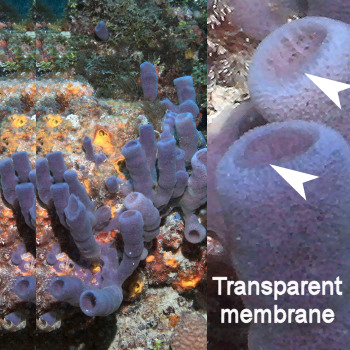
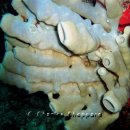
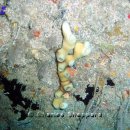
Cluster of interconnected tubes, or lobate, prostrate mass with a tendency to form upright, short, interconnected tubes. |
| Surface: |
Smooth; slightly irregular in massive lobate specimens. |
| Color: |
External: bright to pale blue, mauve, pale brownish, gray with whitish spots, or off-white. Internal: paler than exterior. |
| Consistency: |
Firmly spongy. |
| Exudate: |
None. |
| Oscules: |
Apical, up to 12 mm across, with thin collar-like membrane. |
| Skeletal components (Spicules, fibers): |
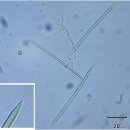
Spicules are small straight double-ended needles (oxeas) (67-80 x 1-2.5 ?m) with stepped, mammiform tips. Spongin fibers are clear, of two diameters. |
| Skeletal architecture: |
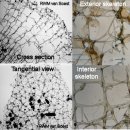
Distinct surface spongin meshwork with large triangular and rectangular meshes (primary fibers) accompanied by smaller interconnecting meshes (secondary fibers). Interior spongin fiber meshwork sparsely cored by spicules, mostly very regular, with clear distinction between thicker (primary) fibers ascending towards the surface and thinner (secondary) fibers connecting them (anisotropic reticulation). |
| Ecology: |
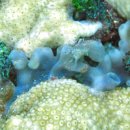
A common reef species. Morphology tends to vary with depth, with grey-whitish irregular forms chiefly shallow in coral crevices, and bright blue interconnected tubes in deeper water. |
| Distribution: |
South Florida and throughout the Caribbean Sea with a wide depth range (6-24 m). |
| Notes: |
Specimens fit well with the literature descriptions. |
| Reference(s): |
Wiedenmayer, 1977; van Soest, 1980; Zea, 1987. |
|
|
| Similar species: |

Callyspongia vaginalis |

Chalinula molitba |
|