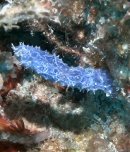
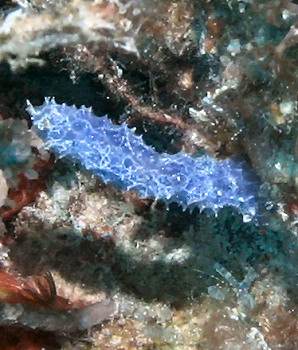
Dysidea etheria De Laubenfels, 1936
Dictyoceratida, Dysideidae
| Common name: |
None. |
| Growth Form: |
Amorphous, encrusting, lobate, or finger-like. |
| Surface: |
Sharp conules , 1 mm high or more, about 2-3 mm apart. |
| Color: |
Bluish, lavender to gray. Paler inside. |
| Consistency: |
Softly spongy, very compressible, limp, weak, easily torn. |
| Oscules: |
Few, round, flush or with a slightly raised transparent membrane; scattered or on tops of lobes, 5–10 mm wide. |
| Skeletal components (Spicules, fibers): |
Spongin fiber meshwork densely filled with foreign material (sand grains and spicule fragments). No native spicules. |
| Skeletal Architecture: |
Meshes variable, from rectangular to rounded. Clear primary fibers (140-370 μm across) loaded with foreign material. Smaller secondary fibers (30-260 μm across) not distinct, containing less foreign material. Free spongin chiefly at fiber junctions, clearly stratified. |
| Ecology: |
On shallow reefs, bays, lagoons, seagrass beds on hard bottoms. |
| Distribution: |
South Florida and throughout the Caribbean Sea. |
| Reference(s): |
van Soest 1980, Zea 1987 |
| Similar species: |
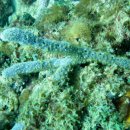
Niphates erecta |
|
|